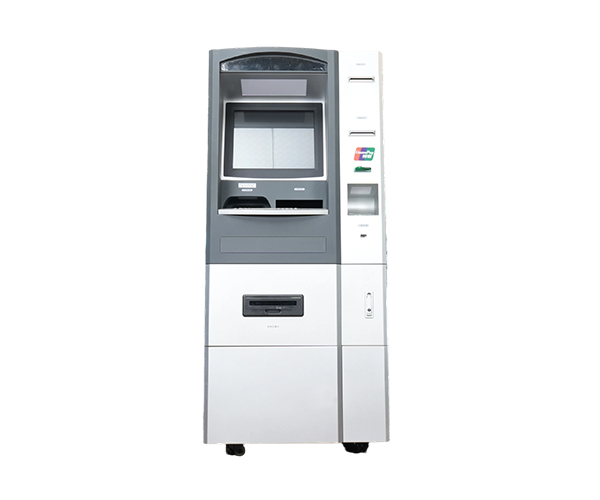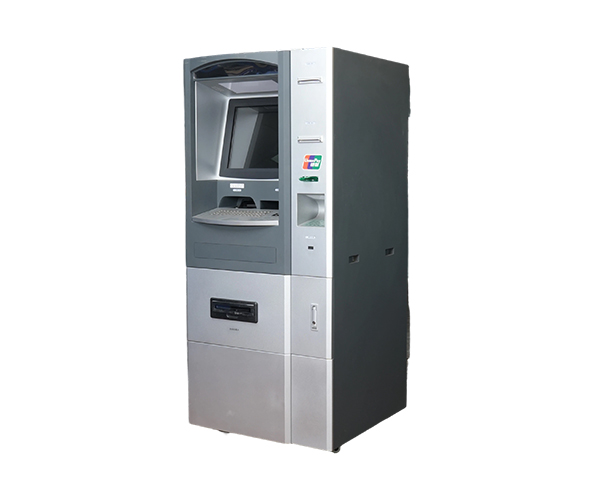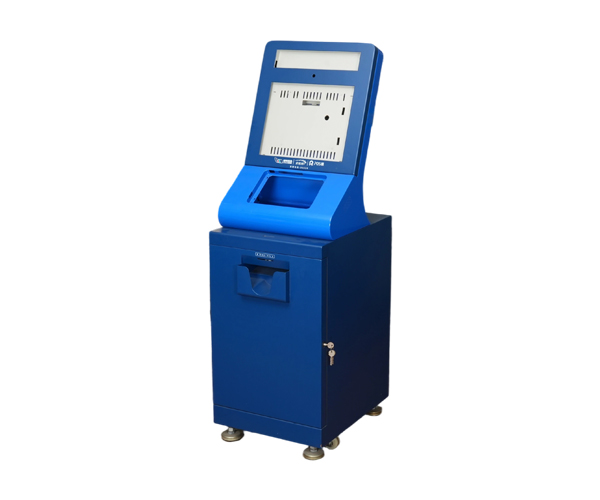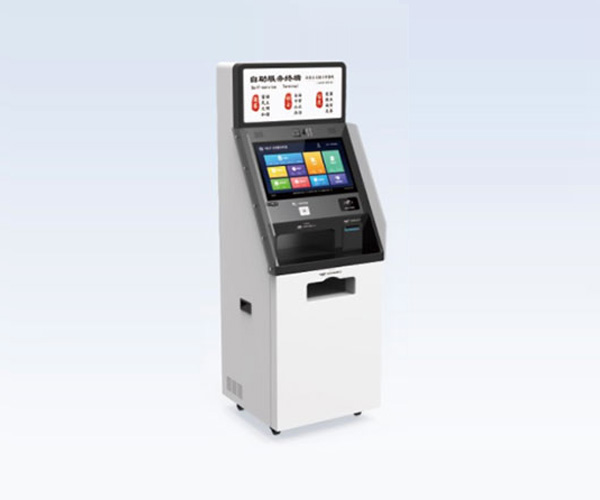
The industry is undergoing the most intense round of reshuffling, but the ultimate outcome of the reshuffling is not "zero elimination", but "redefinition". From the supply side, traditional equipment manufacturers have been forced to transform. Taking representative enterprises in the industry as an example, ATM related revenue has shrunk from hundreds of millions of yuan to millions of yuan, and the production of cash equipment has decreased by more than 50% year-on-year. The logic of industry competition has shifted from price games to comprehensive value competition, and manufacturers without AI algorithms, secure encryption, and domestic platform capabilities are being eliminated. Top domestic manufacturers occupy over 75% of the market share, and technological barriers continue to rise.
If the deposit and withdrawal all-in-one machine five years ago was still a "tin cabinet", then by 2026 it will be an intelligent terminal loaded with an AI brain. The direction of industry evolution is clearly unfolding from four dimensions. Firstly, adapting to aging and transforming into a necessity. 82.9% of users use mobile payments daily, but this also means that nearly 20% of the population still relies on cash or is not proficient in smart operations. The industry consensus is that enlarging fonts, full voice navigation, supporting passbook business, and simplifying operation processes - these are not just icing on the cake, but "hard standards" explicitly required by regulators.
Numbers don't lie. As of the end of the first quarter of 2026, the number of ATM machines such as deposit and withdrawal machines in China has decreased to 725800 units, a sharp decline of over 36% from the historical peak of 1.1286 million units in the third quarter of 2018. Over the past five years, there has been a net decrease of 280400 units, with an average of 154 devices disappearing from the streets every day. At the same time, the mobile payment business will reach 231.464 billion transactions and a total amount of 57.197 trillion yuan in 2025. Scanning codes and facial recognition have covered the vast majority of high-frequency scenarios such as catering, transportation, and retail. Behind this set of data is a deep logic of the industry shifting from "volume expansion" to "precise survival".
Both the first and second generation ID cards are supported, and the system supports recognition of both the first and second generation ID cards, allowing for card opening services for the vast majority of customers. The system can support the opening of ID cards and also supports the opening of passbooks. Fully functional, the system provides card opening, replacement, and exchange functions, as well as all non cash functions of bank self-service terminals, which can replace traditional bank self-service terminal devices. Humanized design, easy to use, the size and dimensions of the self-service card dispenser equipment fully consider the principles of ergonomics and are user-friendly. For example, customers can insert cards and issue cards through the same interface, which is convenient for customers to operate.
With the relevant dimensions of the network cabinet, check the appearance of the equipment to ensure it matches the selected bracket. A sturdy cabinet can support up to 450 pounds, so check the tools used to remove the equipment, such as doors or handcarts. A good network cabinet is equipped with wheels underneath, so you only need to install the necessary equipment and push the network cabinet to the appropriate location. Measure the size of the room and the height of the ceiling, doors, and elevator that the cabinet passes through. Furthermore, considering the multiple types of equipment inside the cabinet, ensure that the network cabinet is placed close to the power supply, network cable sockets, and communication sockets.